What to Play Tonight, When Everyone Is Already Here
Six people, one sofa, and twenty minutes of nobody deciding anything. Here is what to open on the nearest screen instead.
7 دقيقة قراية
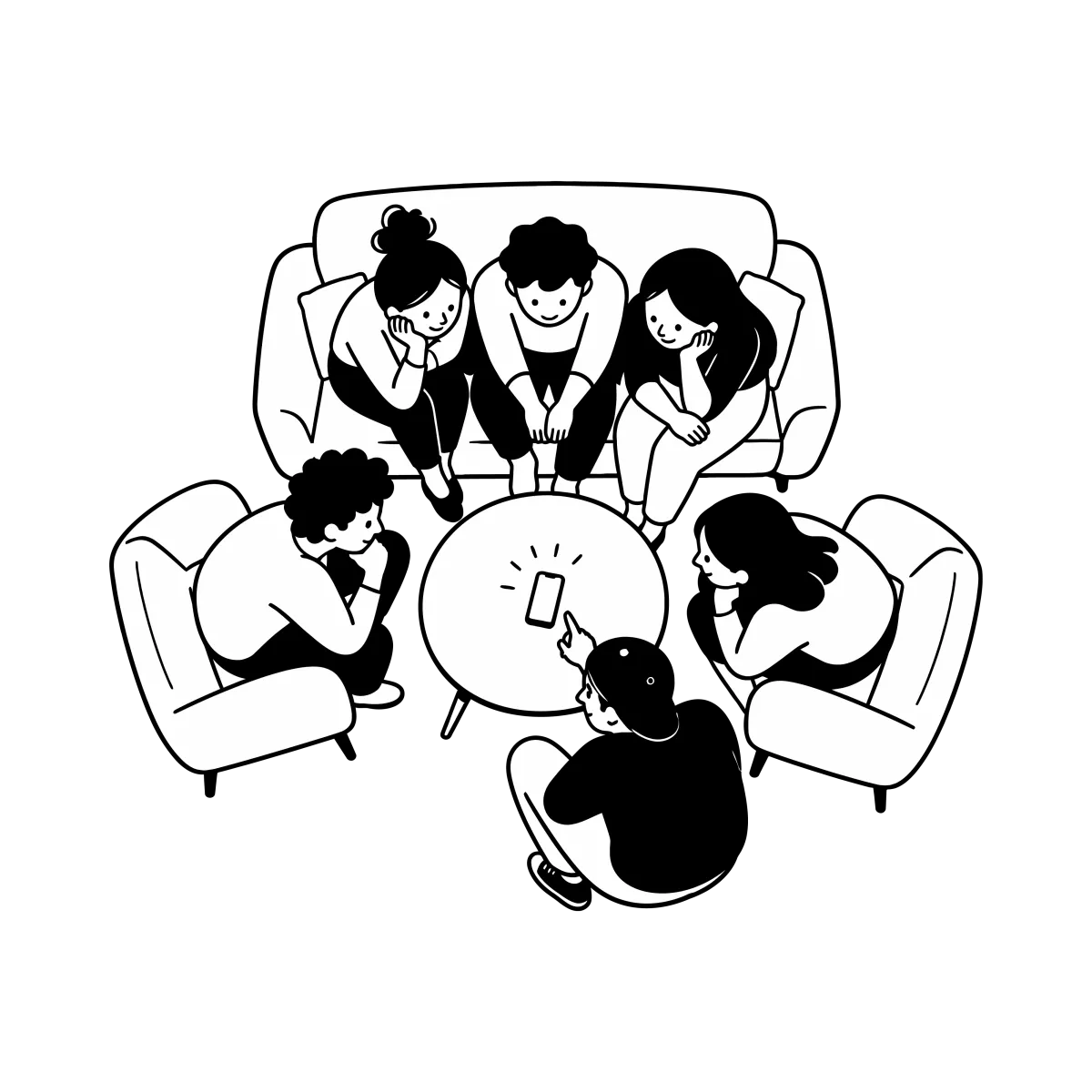
The hard part of a game night is never the game. It is the twenty minutes before it, when six people are already sitting down, the food is finished, somebody has suggested charades and been ignored, and the group is drifting quietly back into their phones one by one.
You do not need to buy anything to fix that. CircleNight is a set of party games that run in a browser — the browser already open on whatever is nearest, whether that is a phone, a tablet or a laptop. You pick a game, the screen shows a question or a challenge, and somebody reads it out. There is nothing you have to install and nothing to sign up for, which matters mainly because both of those things take longer than the window you have before the room gives up on you.
The two kinds of game here
There are eight games on the site, and they split into two shapes that play very differently.
Deck-based games are a mechanic plus a set of cards. Truth or Dare is the mechanic; which truths and dares you get is the deck. The same game is a gentle icebreaker with one deck and unprintable with another, so the deck is the real decision. At the time of writing, in September 2026, there are twenty-three of them, and they are sorted by who you are playing with — friends, couples, a first date, a work team that has just been told to bond.
Direct-play games have no deck at all. Werewolf and The Imposter are whole games in themselves: roles, a secret, a vote. You do not pick content for them, you pick players.
If you have three minutes and no idea what the group wants, start with a deck-based game. If you have half an hour and everyone is properly awake, the direct-play ones are better.
A deck-based game, from open to first laugh
Say you land on Truth or Dare. You choose a deck — Cheaper Than Therapy is the safe opening, funny and low-risk, built to break the ice without ruining a friendship.
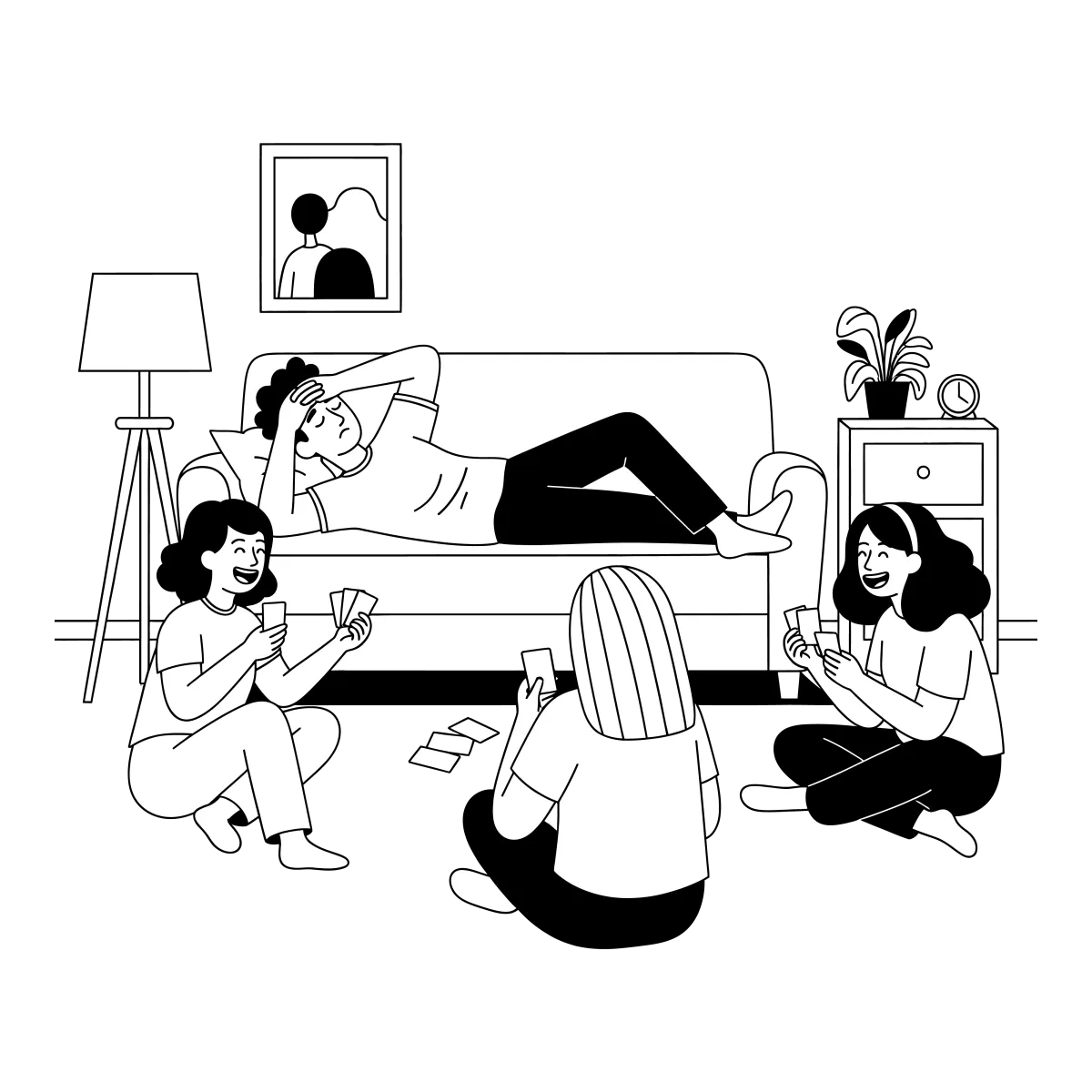


Then one person taps, the card comes up, and they read it out. The device stays in the middle or goes round the circle; the game does not care, it just shows the next card. The whole interface is one card and one button, because anything more than that is a thing somebody has to explain while the room waits.
What comes up is written to be read aloud, not skimmed. These three are all from that deck, and they give you a fair idea of the register — a question that starts an argument, a question that starts a story, and a dare that costs nothing but dignity:


أغرب رأي عندك
شنية الحاجة المشهورة برشا وإنت من داخلك ما تطيقهاش؟

حضر روحك باش تدافع على شرفك.


 حقيقة
حقيقة
أغرب تخلويضة ماكلة
شنية خلطة الماكلة لي تحبها في السر أما العباد لخرين ينجمو يراوها تعيف؟
خمم في حاجة كيما الهريسة بالمعجون، أما أغرب بياسر.


 تحدي
تحدي
يدين ديناصور صغير
للزوز دورات الجايين، خلي مرافقك لاصقين في جنابك واستعمل يدين الديناصور.
جرب هز حاجة. الحكاية أصعب ملي تظهر.
Every other deck-based game works the same way with a different frame around the card. Would You Rather gives you two bad options and makes you defend one. Never Have I Ever reads a statement and everyone who is guilty puts a finger down. Most Likely To reads a question, counts to three, and has the whole table point at somebody at once — which is the loudest of the six and the best one to play when a group already knows each other far too well.
اللعبة
شكون أكثر واحد
اكتشف كيفاش أصحابك يشوفوا فيك بالرسمي. اقرا السؤال، احسب لثلاثة، وشاور بصبعك.
العب شكون أكثر واحدConversation Starters and Is It Cheating? are the slower two: one asks a question and gets out of the way, the other puts a relationship grey area to a vote and lets the table fight about it.
A game with no deck at all
Werewolf is the one to put on when the night has room for it. It needs five players minimum and works up to twelve, and it is narrated by whichever device is lying in the middle of the table. Everyone passes it around once to see their secret role in private. Then it runs the night: it tells the table to close their eyes, wakes the werewolves so they can choose somebody, wakes the Seer so they can check somebody, and in the morning it tells you who did not survive. You argue, you vote out loud, and you find out what the person you just hanged actually was.
At the time of writing, in September 2026, there are nine roles in the box — Seer, Witch, Guardian, Hunter, Prince, Mason, Cursed, Villager and the Werewolf itself — so the same group can play it several nights running and get a different game each time.

اللعبة
Werewolf
Every night the werewolves take somebody. Every day the village argues about who to hang, and gets it wrong.
العب WerewolfThe Imposter is the shorter one, and the easier sell to a group that has never played anything like this. Three to twelve players, five minutes a round. Everybody is shown the same secret word, except one player, who is shown only the category and has to bluff their way through. You go round the circle saying a single word about it — vague enough and you look guilty, precise enough and you have just handed the imposter the answer — then you vote. Catch them and they still get one guess at the word to steal the round.

اللعبة
المتحيل
الناس الكل يشوفو نفس الكلمة السرية — ما عدا ملاعبي واحد، يشوف كان التصنيف ولازمو يبلفط.
العب المتحيلBoth of these ask more of the room than a deck game does. Nobody can be half-watching a video while Werewolf is running. That is the point of them, and also the reason they are the wrong choice at 1am.
Playing when you are not in the same room
Deck games can be played online as well, which is a different thing from playing them on one device. Whoever is hosting needs a CircleNight account; they open a deck, hit Play Online, and get a six-character room code. Everybody else opens the join page, types the code and a display name, and they are in — no account, no email, nothing to confirm. A room holds up to twelve people. The cards stay in sync for everyone, there is a text chat, and you can record and send voice clips of up to thirty seconds.
Be clear about what that is and is not. It is not a video call and it is not live audio — the voice messages are recorded clips, sent and played back, and every one of them is deleted when the room ends. Most groups run a normal video call on a laptop and use the room for the game itself. And online rooms are built around decks, so Werewolf and The Imposter are not part of them yet: for now those two are same-room games, played on one device that people pass to each other. Online play for both is coming in a future update.
What it costs, and what it will not do
Playing is free. All twenty-three decks are open, all eight games are open, and there is no account required to play in person — the games work in a browser. The site runs in eight languages, and the cards themselves are translated, not just the menus, including Moroccan, Egyptian and Tunisian Arabic alongside standard Arabic.
Two honest caveats. The most explicit decks ask you to verify your age before they will deal you a card, and hosting one of those in an online room additionally wants a verified email address. And there is one paid thing on the site: a printable version of a deck, a PDF you buy and print on card so you can play it with no screen at all. That is separate from playing, and playing never asks you for it.
There is an Android app on Google Play if you would rather tap an icon than find a bookmark; it is the same games behind the same account. Everywhere else — an iPhone, a tablet, a laptop — you open the site and you are playing, with nothing to install and no store page to visit first. That is the part that makes this work as an answer to a room that has stopped talking: whoever is holding the nearest screen can start, and nobody else at the table has to do anything at all.

